

From First Touches to Team Football
A development pathway shaped through real coaching relationships, giving children the time, support and opportunities to progress when they are ready.
Progression Without Pressure
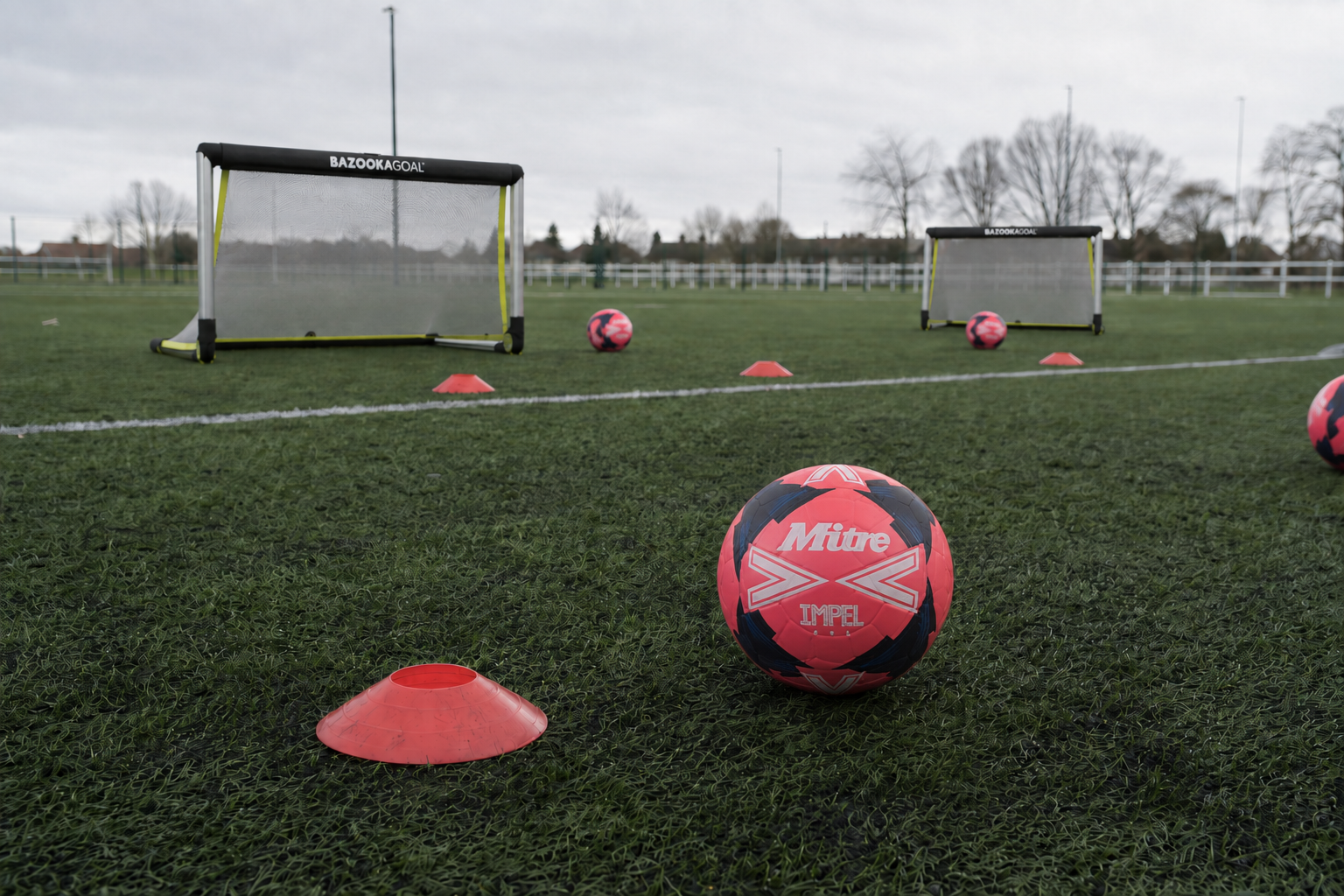
The pathway begins within our Minis programme, where the priority is creating a fun and engaging first experience of football. Children are given plenty of opportunities to explore the ball, develop their coordination and practise dribbling, turning and shooting through activities that keep them active and involved. At this stage, confidence and enjoyment are more important than match results or rigid positions.
As children become more comfortable, they can move into pre-team coaching. Sessions gradually introduce greater game understanding, teamwork, communication and decision-making through small-sided practices. Players begin to experience the routines and responsibilities involved in team football while continuing to receive plenty of individual contact time with the ball.
Each season, the pathway supports the formation of new Under-7 teams for Maypole FC. This provides children with a natural transition from familiar J W coaching groups into organised grassroots football, often alongside players with whom they have already trained and formed friendships.
Once registered with a Maypole FC team, players enter the club’s own development pathway and team structure. They can continue progressing through the age groups while gaining regular training and match experience.
Some players choose to continue attending J W Football Coaching alongside their Maypole team. Their families feel that the additional weekly session provides more touches, greater technical repetition and focused individual development alongside team training. This is entirely optional.
Every child develops at a different rate. The purpose of the pathway is to provide a clear route from Minis, through pre-team coaching and into grassroots football while ensuring that enjoyment, confidence and the individual child remain central throughout.
How the Pathway Works in Practice
The pathway develops gradually, allowing children to build confidence and understanding before moving into organised team football.

Stage 1 - Mini Kickers
Fun, Movement and First Touches
Children can begin their journey from 3 years and 9 months within a fun, energetic and welcoming environment. Sessions are designed to keep children active and give them plenty of contact time with their own football.
Activities introduce dribbling, turning, stopping the ball, changing direction and shooting while also developing balance, coordination, listening and confidence within a group.
At this stage, the priority is not positions, tactics or match results. It is about helping children become comfortable with the ball, enjoy attending and build the foundations needed for their next stage.

Stage 2 - Weekly Development
Building Individual Ability
As children grow in confidence, weekly development sessions provide more structured opportunities to improve their individual technique and understanding.
Players work on ball mastery, receiving, passing, dribbling, turning and finishing, with practices designed to create repetition without becoming predictable. Small-sided games then allow children to apply those skills while making their own decisions.
The level of challenge is adjusted so newer players can remain involved while more experienced children continue to be stretched. Progress is measured through confidence, consistency, understanding and willingness to attempt new things - not simply by who scores the most goals.

Stage 3 - Pre-Team Coaching
Preparing for Grassroots Football
Pre-team coaching provides the bridge between weekly development sessions and organised team football.
Children begin training more consistently alongside a familiar group. Sessions introduce greater teamwork, communication, movement, support play and understanding of how to react when possession changes.
Players also become familiar with match direction, restarts, boundaries, simple positions and the responsibilities involved in representing a team. This is introduced gradually so that team structure does not replace creativity or individual development.
The aim is for children to enter grassroots football feeling confident, prepared and comfortable alongside teammates they already know.

Stage 4 - Maypole FC
Moving into Under-7 Team Football
Each season, new Under-7 teams are formed for Maypole FC through the pathway. This allows children to progress into organised grassroots football alongside players with whom they have already trained, developed and formed friendships.
J W Football Coaching has helped form 18 teams for Maypole FC over three years, creating a genuine route from introductory sessions into regular team training and matches.
Once registered, players enter Maypole FC’s own team structure and wider player pathway, progressing through the age groups under the club’s management.
Some families also choose to continue attending J W Football Coaching alongside their Maypole training. The additional session provides more individual ball contact, technical repetition and focused development while their team sessions prepare them for matchday. This additional coaching is entirely optional.
Readiness Is About More Than Football Ability
Moving into pre-team or team football is not based on who is the quickest, strongest or most confident player in one session. We look at how a child develop over time and whether the next environment will support their continued enjoyment and progress.
Signs that a child may be ready for the next stage include:
- Enjoying sessions and wanting to participate regularly
- Growing confidence and control when using the ball
- Listening and attempting to apply coaching information
- Making decisions during practices and small-sided games
- Communicating and working alongside other children
- Responding positively when something does not go to plan
- Showing readiness for the commitment of regular training and matches
Children will demonstrate these qualities at different times. When the appropriate signs begin to appear consistently, we can speak with parents about the next stage and how best to support the transition.
The purpose is never to rush a child. It is to help them enter the next environment feeling prepared, confident and excited about what comes next.
.